Maria revealed infrastructure already operating with insufficient capacity and outdated design standards. The storm wasn't the surprise, the margins were. Seven years later, much recovery work replaces destroyed infrastructure with the same inadequate designs rather than addressing the fundamental capacity gap.
Seven years after Hurricane Maria made landfall on Puerto Rico on September 20, 2017, the dominant public narrative about the storm's impact on the island's infrastructure centers on the emergency response, the delayed federal aid, the slow power restoration, the contested death toll. Those conversations are important and necessary.
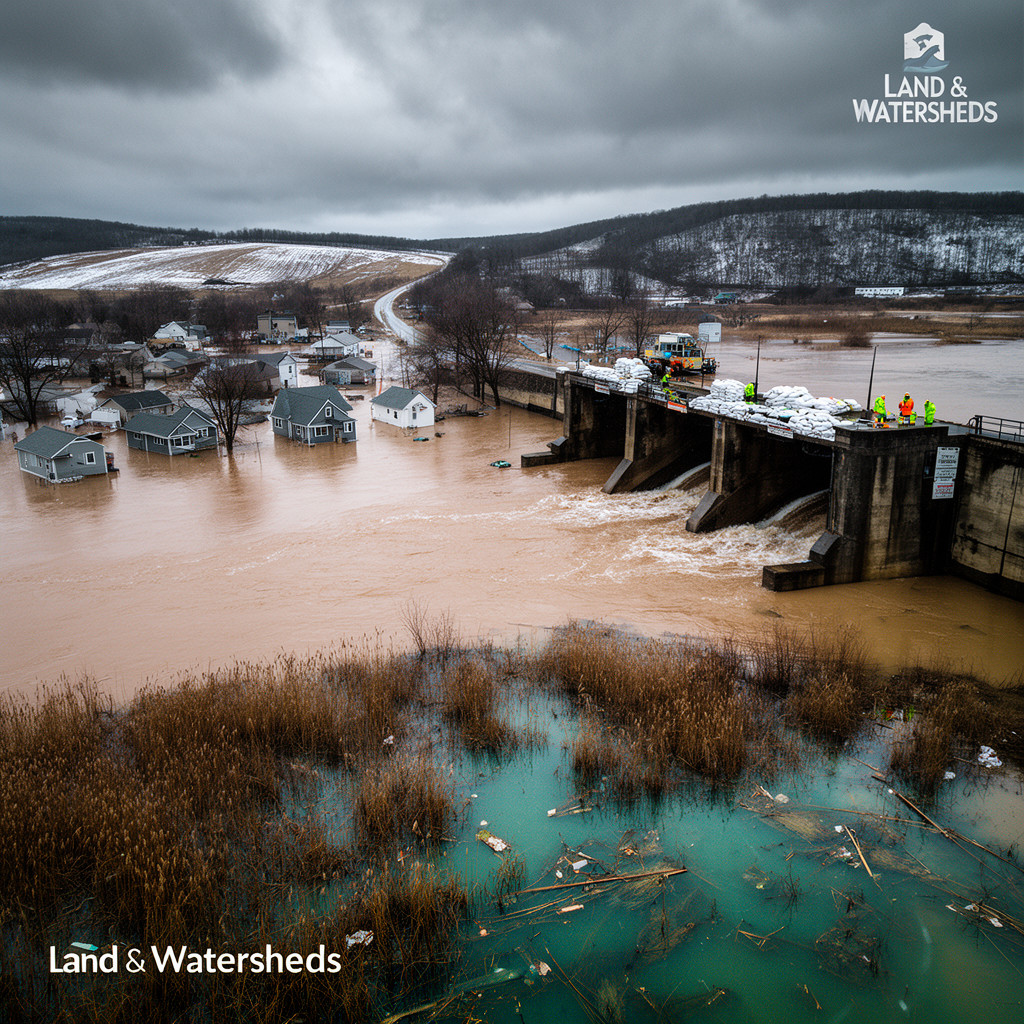
But there is a quieter, more technically uncomfortable lesson embedded in Maria's destruction that the engineering and planning community has not fully absorbed. The storm didn't just destroy infrastructure that was in its path. It performed a comprehensive stress test on an entire island's worth of drainage systems, road crossings, culverts, retaining walls, and hydraulic structures, and what a stress test reveals is not just where things broke, but what the margin between design capacity and actual demand looked like before the storm ever arrived.
In many cases, that margin was razor thin. And in some cases, it wasn't a margin at all.
There is a meaningful technical distinction between infrastructure that was adequate for its design conditions and was overwhelmed by an extraordinary event, and infrastructure that was never adequate to begin with and was simply waiting for a sufficiently large storm to demonstrate that fact. Maria produced both categories of failure, and conflating them leads to the wrong conclusions about what recovery and rebuilding should prioritize.
Some of Puerto Rico's infrastructure failed because Maria was genuinely extraordinary. The storm produced rainfall totals that, in multiple locations, exceeded the 1,000-year AEP threshold based on pre-Maria IDF data. No rational design standard requires infrastructure to perform under those conditions without damage. Failure at that level of exceedance is not a design deficiency. It is physics.
But a significant portion of the failures, the culverts that washed out during the early hours of the storm before peak rainfall, the retaining walls that collapsed on slopes that had seen much smaller events without incident, the drainage channels that filled with sediment and overtopped before the storm was halfway through, these were not failures of extraordinary conditions. These were failures of systems that were already operating with insufficient capacity, deferred maintenance, and design assumptions that hadn't been revisited in decades.
Puerto Rico's stormwater and drainage infrastructure was designed, for the most part, using methodologies and rainfall data that were developed and calibrated decades before Maria, and in many cases, before the island's land use patterns had been substantially transformed by mid-20th century development.
The IDF curves used for drainage design in Puerto Rico are based on historical rainfall records that predate the intensification of Atlantic hurricane activity observed in recent decades and the broader shifts in precipitation patterns associated with a warming climate. The design storms embedded in those curves, the 10-year, 25-year, and 100-year events that govern culvert sizing, channel capacity, and detention requirements, may substantially underestimate what the current and future climate is capable of delivering.
This is not unique to Puerto Rico. IDF curves across much of the United States are similarly outdated. But the combination of tropical climate variability, steep topography, intense short-duration rainfall, and rapid watershed response times makes Puerto Rico particularly sensitive to underestimates in design storm intensity.
A culvert designed for the 25-year storm using 1970s IDF data in a watershed that has since been 40% paved is not a 25-year culvert. It is a culvert of unknown and probably significantly reduced return period, operating in a watershed whose hydrologic response has been fundamentally altered since the design was completed. Maria simply made that gap visible in the most dramatic possible way.
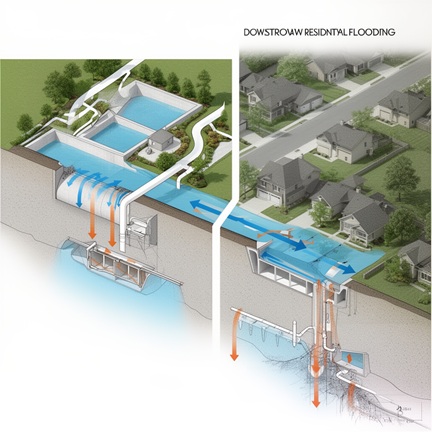
Separate from design adequacy is the question of maintenance. Drainage infrastructure performs at its design capacity only when it is clean, structurally intact, and hydraulically unobstructed. Culverts blocked by debris and sediment don't convey their design flow. Channels that have been encroached upon by vegetation or fill don't have their design cross-section. Detention basins that have accumulated decades of sedimentation don't have their design storage volume.
Puerto Rico's drainage infrastructure, like infrastructure across much of the United States, has been subject to chronic maintenance underfunding. The political economy of maintenance is brutally unfavorable: it is invisible when it works, expensive relative to its apparent benefit, and easily deferred in favor of capital projects that are more visible, more fundable, and more politically rewarding.
When Maria arrived, it encountered not just aging and potentially undersized infrastructure, but aging and potentially undersized infrastructure that in many cases had not been inspected, cleared, or maintained in years. The storm didn't create those blockages. It encountered them and produced predictable results.
Infrastructure recovery after a major disaster is one of the rare moments when the political and financial conditions for significant improvement align. Federal recovery funding creates capital availability. Destroyed infrastructure creates the opportunity to rebuild rather than repair. Public attention creates political will for investment that is normally impossible to sustain.
In the years following Maria, Puerto Rico received substantial federal infrastructure investment through FEMA's Public Assistance program, HUD's Community Development Block Grant Disaster Recovery program, and other federal channels. Some of that investment has been directed toward genuinely improved infrastructure, redesigned drainage systems, updated culverts, restored channels with better hydraulic geometry.
But a significant portion of the recovery work has consisted of replacing destroyed infrastructure with infrastructure of similar design to what was destroyed, the same sizing assumptions, the same design storm thresholds, the same design methods, in a climate that has demonstrably changed since those methods were calibrated. Recovery work that rebuilds to the same standard is not resilience. It is repetition.
The question that should govern every drainage infrastructure replacement decision in post-Maria Puerto Rico is not "what was there before?" It is: what does this watershed actually produce, and what does the downstream receiving water actually need from this structure over its design life under current and projected climate conditions? Those are harder questions. They require updated hydrology, watershed-scale analysis, and design standards calibrated to the climate Puerto Rico actually has rather than the climate its historical record described. They are also the right questions.
None of this is a counsel of despair. Puerto Rico has real assets for building more hydraulically resilient infrastructure. The engineering talent exists. The federal funding, however imperfectly deployed, is substantially available. The political motivation, in the wake of Maria's destruction, is as high as it is likely to get.
What is needed is a systematic update of the hydrologic and hydraulic design standards used for drainage infrastructure in Puerto Rico, IDF curves based on contemporary precipitation data, design storm thresholds calibrated to current and projected climate conditions, and design methods that account for the island's specific terrain and watershed response characteristics rather than defaulting to mainland U.S. standards developed for different hydrologic environments.
What is also needed is a maintenance culture that takes drainage infrastructure seriously between disasters rather than only after them. Inspection programs. Sediment removal schedules. Clear responsibility for maintaining drainage easements and channel rights-of-way. The operational discipline that keeps design capacity actual capacity rather than theoretical capacity.
Maria was not Puerto Rico's last major storm. The question is whether the infrastructure in place for the next one will have learned from what the last one revealed, or whether it will be rebuilt to pass the same stress test it already failed.
Q: What failed during Hurricane Maria?
A: Infrastructure designed using outdated IDF curves and insufficient maintenance, not just extraordinary storm conditions.
Q: Were design standards adequate?
A: Many structures used decades-old rainfall data that underestimated current climate precipitation patterns.
Q: What should recovery prioritize?
A: Updated hydrology with contemporary precipitation data and design standards calibrated to projected climate conditions.
Q: Why does maintenance matter?
A: Drainage infrastructure performs at design capacity only when clean and structurally intact, blockages reduce effectiveness dramatically.
Q: What did Maria teach?
A: The gap between design capacity and actual demand was razor-thin before the storm, revealing systemic underfunding and outdated standards.